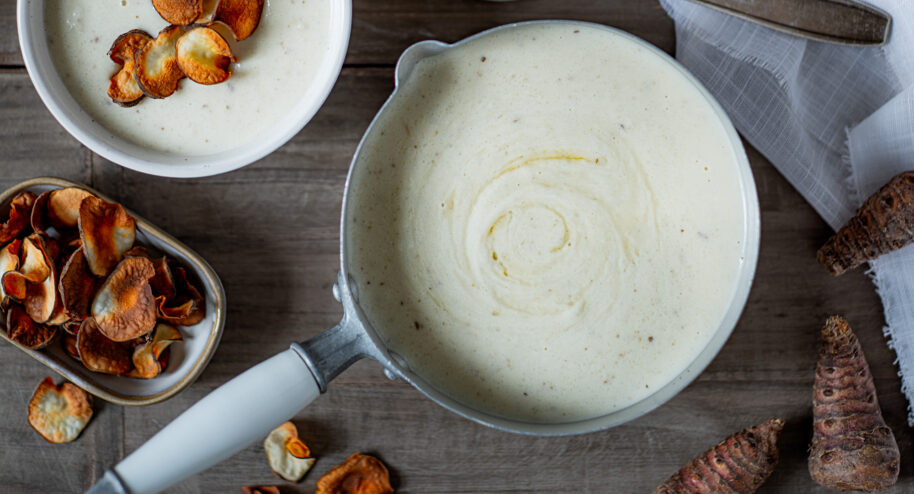
This is “my recipe”; there is no onion, parsley, pancetta, or truffle… which can all be added for a variation on the base recipe, but I still prefer the basic Velouté de Topinambour, where the taste of the Jerusalem Artichokes is well blended with the Hazelnuts and Walnut oil. A Classic at the Dehon’s family dinner.
Ingredients :
- 500g of Jerusalem Artichokes
- 50g of Hazelnuts
- 1 Tablespoon of Walnut oil.
- 20-25g of Butter
- Salt and White Pepper
- 1 chicken stock cube
- 500ml of water
- 100ml of single cream
How to Make :
- Clean and peel the Jerusalem Artichokes (drop them in cold water so that they do not oxidise)
- Chop the Jerusalem Artichokes into slices of about 5mm or half a cm thickness
- Put the Jerusalem Artichokes, the Hazelnuts, the Salt, the Pepper, the Walnut oil, and the Butter in the Thermomix on “Browning” Gentle for 10 minutes.
- Add the 500ml of water and bring to a boil. I use the Manual mode of the Thermomix for 10 minutes at 105 degrees, speed 2.
- By now, everything is cooked, and we simply want to make a nice texture.
- First blend for 1 minute on speed 8.
- Add the cream and blend again for 30 seconds on speed 8.
- Adjust Salt and Pepper as you see fit. I like it when you can taste the White Pepper.
- If you are making it without the Thermomix, simply fry in a saucepan for 10 minutes, making sure nothing is burning at the bottom, then add the water and cook for a further 10 minutes, then blend, then blend again with the cream.
- Serve warm.



A bit of history about the topinambour :
In France, the topinambour is deeply intertwined with the collective memory of the German Occupation (1940–1944).
While they were once a delicacy in the 17th-century French royal courts, their reputation was forever changed by the hardships of World War II.
Why they became a “War Food”
-
The Potato Shortage: During the Occupation, the German army commandeered most of France’s potato crops to feed its troops. Potatoes were also used to produce fuel (alcohol) for the German war effort.
-
The Unregulated Alternative: Unlike potatoes, topinambours were largely ignored by the occupying forces, considered “fodder” for livestock. Because they weren’t strictly rationed or seized, they became a vital survival food for the French population.
-
Roadside Growth: You are correct about their location. Because the plant is incredibly hardy and invasive, it frequently escaped gardens and grew wild along roadsides, ditches, and railway tracks. For many starving families, foraging these “wild” tubers was one of the few ways to supplement meagre rations.
The “Forgotten” Vegetable
For decades after the war, topinambours (along with rutabagas) were known in France as légumes oubliés (forgotten vegetables).
“For the generation that lived through the war, the taste of topinambour wasn’t a culinary choice—it was the taste of hunger, occupation, and digestive distress (due to the high inulin content and the lack of other foods to balance it).”
Many survivors refused to ever eat them again once the war ended, and they virtually disappeared from French markets for nearly 50 years.
The Modern Renaissance
Today, the topinambour has made a massive comeback in French “bistronomy.” Modern chefs have reclaimed it for its unique, nutty flavour, often serving it as a velvety velouté or roasting it with thyme. It’s no longer seen as a sign of poverty, but as a gourmet winter root.